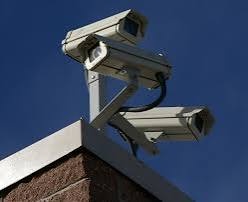
Security cameras have become a familiar sight in offices, retail stores, warehouses, residential buildings and other properties across Abu Dhabi. But installing a few cameras on a wall is not the same as designing an effective surveillance system.
The quality of the cameras matters, but so do their positioning, recording capacity, network infrastructure, storage and ongoing maintenance. A system that looks impressive during installation may not be particularly useful if important areas are poorly covered or recorded footage is difficult to retrieve.
This is why businesses often look beyond the equipment itself and compare CCTV companies in Abu Dhabi that can design and install a surveillance solution around the property's actual requirements.
The purpose of CCTV goes beyond simply recording incidents.
Visible cameras can act as a deterrent in areas where unauthorized activity is a concern. Recorded footage can also provide useful information when businesses need to investigate an incident, understand what happened or review activity around a particular location.
For a retail business, cameras may cover entrances, checkout areas and storage rooms. An office may need surveillance around reception areas, entrances, parking spaces and restricted zones. A warehouse can have completely different requirements because of its size, loading areas and storage layout.
The system should therefore be designed according to the environment rather than using the same camera configuration everywhere.
A surveillance system normally consists of more than cameras.
Cameras capture video, while recording equipment or network-based storage preserves the footage. Depending on the installation, businesses may also need monitors, network switches, cables, power equipment and appropriate storage capacity.
Modern systems can offer features such as high-resolution video, night vision, motion detection and remote viewing. Some solutions may also incorporate intelligent video analytics.
However, having more features does not automatically make a system better. A business should first determine what it needs to monitor and then select equipment that supports those objectives.
Even an expensive camera can be ineffective if it is positioned incorrectly.
A camera aimed toward a strong light source may produce poor images. A camera installed too high may make it difficult to identify people. Another camera may cover an area that is already visible while leaving an important entrance unmonitored.
This is why a site assessment is an important part of CCTV planning.
Installers can examine entrances, exits, corridors, parking areas, storage locations and other relevant points before deciding where cameras should be placed.
The objective should be useful coverage rather than simply installing as many cameras as possible.
The environment plays an important role in equipment selection.
Indoor cameras generally have different requirements from cameras installed outdoors. Outdoor equipment may need suitable protection against dust, moisture, heat and other environmental conditions.
The camera's viewing angle and night-time performance also need to be considered. A parking area, for example, may require a different solution from a brightly lit office corridor.
Businesses should discuss these conditions with their installer before purchasing equipment.
Recording capacity is another issue that is sometimes overlooked.
The amount of storage required depends on factors such as camera resolution, number of cameras, recording settings and the length of time footage needs to be retained.
Continuous recording will naturally require more storage than recording based on specific events or motion, although the appropriate approach depends on the security requirements of the property.
Businesses should establish their retention requirements before finalizing the recording system. It is frustrating to discover after an incident that older footage has already been overwritten.
Many modern surveillance systems support remote viewing, allowing authorized users to check cameras through suitable applications or connected devices.
This can be useful for business owners and security teams who are not physically present at the property. A manager traveling between locations, for example, may want to check activity at a particular site without visiting the premises.
Remote access should, however, be configured carefully. Strong authentication, appropriate user permissions and secure network practices are important when cameras are accessible through the internet.
Convenience should not come at the expense of security.
CCTV can become more useful when it forms part of a broader security setup.
Access control systems, alarm systems, intercoms and other technologies can sometimes be integrated with video surveillance. For example, an access-control event can be reviewed alongside footage from a nearby camera.
This gives security personnel more context when reviewing an incident.
For larger facilities, integrating different systems can also reduce the need to manage each security component completely independently.
Choosing a CCTV provider should involve more than comparing camera prices.
Businesses should ask whether the provider has experience with similar properties, whether it conducts a site assessment, what brands and equipment it uses, how installation is handled and what type of maintenance support is available.
The installation itself deserves attention. Cable routing, network configuration, camera positioning and recording setup can all influence the reliability of the finished system.
After-sales support is also worth considering. Cameras and recording equipment may require troubleshooting, replacement or configuration changes over time.
A surveillance system can gradually become less effective if it is ignored after installation.
Cameras can become dirty, cables may develop faults, storage equipment can experience problems and software may require updates. A camera can also be accidentally moved during building maintenance or renovation.
Routine inspections can help identify these issues before they become a serious problem.
Businesses working with experienced CCTV companies in Abu Dhabi should therefore consider maintenance as part of the overall security strategy rather than treating installation as the final step.
A CCTV system is only as useful as the planning behind it. The right cameras, correct positioning, reliable recording and appropriate maintenance all contribute to effective surveillance.
Businesses should start by identifying what they actually need to protect and what type of activity they need to monitor. From there, they can evaluate equipment, storage, connectivity and future expansion requirements.
When comparing CCTV companies in Abu Dhabi, the focus should therefore be on the complete solution rather than the price of individual cameras. A properly designed and maintained surveillance system can provide businesses with greater visibility of their premises and useful recorded information when it matters most.

This post has been authored and published by one of our premium contributors, who are experts in their fields. They bring high-quality, well-researched content that adds significant value to our platform.









Paris in France is your trusted source for Paris travel guides, cultural insights, attractions, lifestyle articles, and local experiences. Explore the beauty and charm of Paris with us.