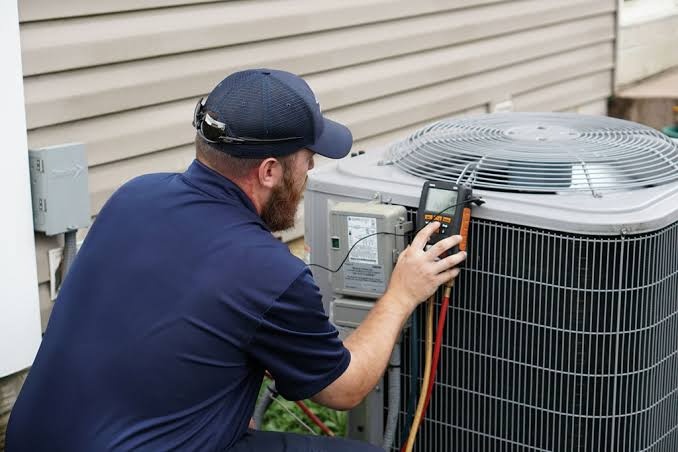
Heat pumps have become an increasingly important part of modern residential HVAC systems. Their ability to provide both heating and cooling makes them a versatile choice for homeowners seeking year-round comfort. As technology advances in 2026, heat pumps are becoming more efficient, intelligent, and connected.
At the same time, homeowners need to understand how to recognize performance problems before a minor issue becomes a major system failure. When heating or cooling performance changes unexpectedly, professional diagnosis can help determine whether the problem involves airflow, electrical components, refrigerant, controls, or mechanical parts.
For homeowners researching heat pump repair service, understanding current HVAC trends and common warning signs can make it easier to protect equipment performance and maintain reliable indoor comfort.
Heat pumps can experience different problems depending on their age, installation quality, maintenance history, and operating conditions.
Common warning signs include unusual noises, weak airflow, inconsistent temperatures, frequent cycling, unusually long operating periods, or a system that does not switch properly between heating and cooling modes.
Ice accumulation can also indicate a problem, although limited frost during certain heating conditions can be normal for some heat pumps. Modern systems use defrost cycles to manage frost buildup, but persistent or excessive ice should be evaluated by a qualified HVAC professional.
Variable-speed compressor technology continues to be a major trend in 2026.
Traditional HVAC equipment may operate at a limited number of capacity levels, while variable-speed systems can adjust output based on the current heating or cooling demand.
This allows a heat pump to operate at lower capacity when conditions are moderate and increase output when greater capacity is required.
The result can be more consistent indoor temperatures, fewer abrupt cycles, and improved humidity management during cooling season.
However, variable-speed equipment is more sophisticated than conventional systems, making correct installation, configuration, and maintenance especially important.
Connected thermostats are also becoming increasingly common with modern heat pumps.
Depending on the equipment and control system, homeowners can adjust temperatures remotely, create schedules, monitor energy usage, and receive system notifications through connected applications.
Smart controls can provide useful information about equipment operation and help homeowners recognize changes in performance.
Some advanced systems can incorporate occupancy information and historical usage to make automatic adjustments.
These features can improve convenience while helping homeowners manage heating and cooling more efficiently.
Artificial intelligence is another emerging trend in residential HVAC.
Modern connected systems can analyze operating information such as temperature changes, runtime, cycling patterns, and other system data.
When equipment behaves differently from its normal operating pattern, intelligent monitoring may identify a potential issue.
Predictive diagnostics can be particularly useful because they may provide an opportunity to investigate a developing problem before the system experiences a complete failure.
Technology does not replace professional inspection, but diagnostic information can help technicians understand how equipment has been performing over time.
Refrigerants remain an important consideration when servicing modern heat pumps.
The HVAC industry is transitioning toward newer refrigerant technologies in response to environmental objectives and changing regulatory requirements.
Older heat pumps may use refrigerants that differ from those used in newly manufactured equipment.
Because refrigerant handling requires specialized tools, training, and safety procedures, homeowners should not attempt to locate or correct refrigerant problems themselves.
A qualified technician can determine whether a system has a refrigerant issue and identify the appropriate repair strategy.
Restricted airflow is another common source of HVAC performance problems.
Dirty filters, blocked return or supply vents, ductwork problems, or blower-related issues can prevent a heat pump from moving the appropriate amount of air.
Poor airflow can reduce comfort and place additional stress on equipment.
Homeowners should follow manufacturer recommendations for filter maintenance and keep vents unobstructed.
If airflow remains weak after basic maintenance, professional inspection can determine whether the problem is located within the ductwork, blower assembly, or another component.
The outdoor portion of a heat pump requires adequate airflow to operate effectively.
Leaves, grass, branches, and other debris can accumulate around the outdoor unit and restrict air movement.
Homeowners can keep the surrounding area reasonably clear while avoiding damage to delicate components.
During professional maintenance, technicians can inspect coils, electrical connections, refrigerant-related performance, controls, and other components.
Regular service can help identify developing issues and support reliable operation.
Heat pumps rely on electrical components such as capacitors, contactors, control boards, motors, and other equipment.
Warning signs may include repeated circuit-breaker trips, unusual electrical odors, intermittent operation, or a system that fails to start.
Homeowners should not attempt to repair energized electrical components or bypass safety controls.
Repeated breaker trips should be treated as a warning rather than simply resetting the breaker multiple times.
A qualified HVAC professional can safely diagnose electrical problems and determine whether a component needs repair or replacement.
A malfunctioning heat pump does not automatically require complete replacement.
A relatively minor component failure may be repairable, allowing the existing equipment to continue operating effectively.
However, replacement may become more practical when a system is older, requires frequent repairs, has declining efficiency, or experiences expensive component failures.
Homeowners should consider equipment age, repair history, operating costs, expected remaining service life, and the availability of modern high-efficiency technology when making the decision.
Choosing heat pump repair service from an experienced HVAC professional can help homeowners avoid unnecessary repairs and identify the actual source of a problem.
A proper diagnosis should consider the entire system rather than focusing on a single symptom.
Technicians may evaluate airflow, electrical components, controls, system pressures, thermostat operation, outdoor equipment, and other relevant components.
This comprehensive approach can provide a clearer understanding of whether repair, maintenance, or replacement is the most appropriate solution.
Heat pump technology is moving toward greater efficiency, automation, connectivity, and diagnostic capability.
Variable-speed compressors, smart thermostats, AI-assisted monitoring, advanced refrigerants, and predictive maintenance are expected to remain important trends throughout 2026 and beyond.
Homeowners can benefit from combining these technologies with proper installation and routine maintenance.
Recognizing unusual sounds, temperature changes, weak airflow, excessive cycling, and other warning signs can also help homeowners respond before a small issue becomes a significant equipment failure.
Ultimately, reliable heat-pump performance depends on the complete system. Proper sizing, quality installation, clean airflow, appropriate controls, preventative maintenance, and timely professional diagnosis all contribute to long-term comfort and efficiency.

This post has been authored and published by one of our premium contributors, who are experts in their fields. They bring high-quality, well-researched content that adds significant value to our platform.









Paris in France is your trusted source for Paris travel guides, cultural insights, attractions, lifestyle articles, and local experiences. Explore the beauty and charm of Paris with us.